What to see in Santa Pola
Santa Pola is more than its beaches. A Renaissance fortress, a Roman port and a lighthouse on the cape tell the story of a town that has always lived from the sea, and most of it is free to visit.
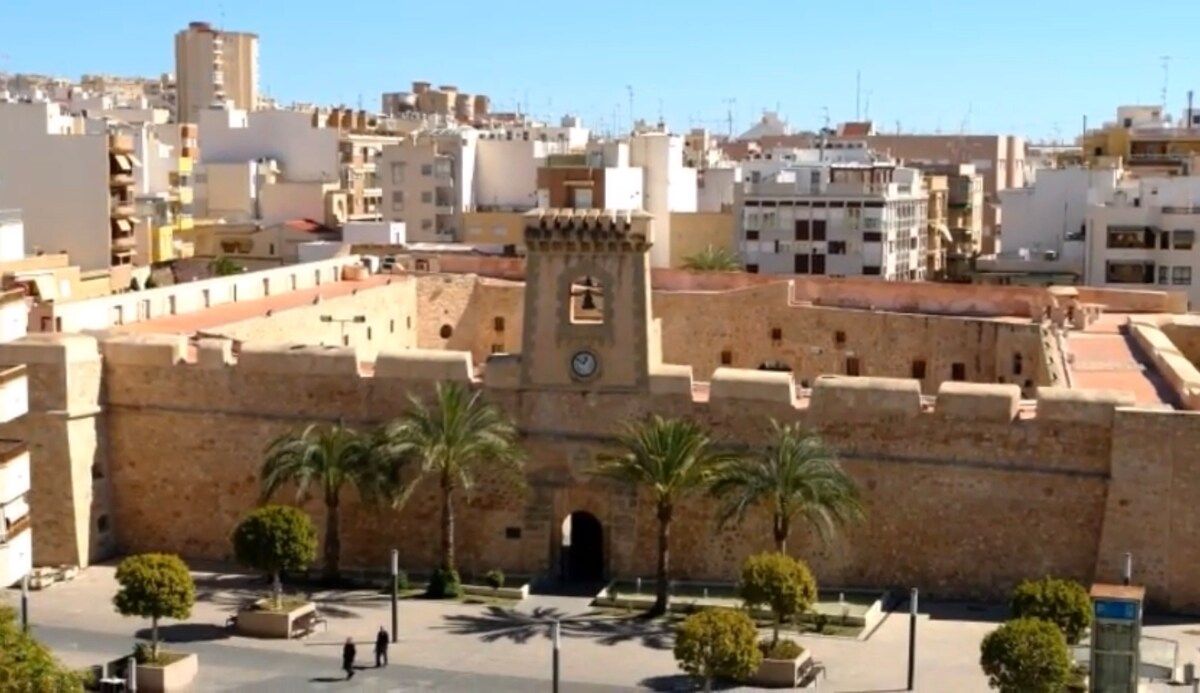
The castle-fortress and the Museo del Mar
The fortress in the middle of town was built in 1557 to protect fishermen and their families from pirate raids. It is a square stone building with two towers and two bastions, and today it is a listed monument. Its parade ground, the Patio de Armas, is open to everyone and links the two halves of the old town.
Inside is the Museo del Mar, Santa Pola's sea museum: fishing and boatbuilding, local music, and the history of the town from prehistory and the Iberians to the Roman port. The old chapel of the Virgen de Loreto is also inside the walls. Entry is free. It is usually open from Tuesday to Sunday and closed on Mondays; opening hours change with the season, so check the Museo del Mar website before you go. Free guided visits are offered at times; ask on +34 965 41 62 23.
From Blanca Rosa it is a 13-minute walk (1 km).
The Roman port: Portus Ilicitanus
In Roman times Santa Pola was the port of Ilici, today's Elche, and the ancient sources called it Portus Ilicitanus. Part of it has been excavated and turned into an open-air museum: a harbour quarter with warehouses, workshops and houses, and the Casa Romana, a house from the 4th century AD with mosaic floors and wall paintings.
The site can only be visited on free guided tours, usually at weekends; places are limited, so book on +34 965 41 62 23. The entrance is on Avenida Portus Ilicitanus, opposite the Palmeral park, a 6-minute walk (500 m) from the apartment.
The aquarium and a historic fishing boat
Next to the fishing port, the municipal Aquarium is the oldest saltwater aquarium in the Valencian region. Its nine large tanks show the fish and plants of the bay and of Tabarca, most of them donated by local fishermen.
Next door, the Esteban González, a trawler that fished the Mediterranean from 1985 to 2005, can be visited on board. Both close from time to time for maintenance, so check the Museo del Mar website before you go.
The lighthouse and the cape
The lighthouse stands at the eastern tip of the Cabo de Santa Pola, on top of a 16th-century watchtower called the Atalayola. It was lit in 1858, and its light shines 152 m above the sea. The cape itself is a fossil coral reef, rare on the Mediterranean coast.
The viewpoint next to the lighthouse looks over the bays of Santa Pola and Alicante and out to Tabarca; on very clear days you can see as far as the Peñón de Ifach. It is 7 km from the apartment, about 15 minutes by car.
Watchtowers and sunset viewpoints
In 1552 a chain of watchtowers was built along this coast to spot pirate ships and pass warnings with smoke by day and fire by night. Two still stand apart from the lighthouse:
- Torre Escaletes, a round tower on the hill above town with a viewpoint over Tabarca and Santa Pola, 5 km by car (about 12 minutes).
- Torre del Tamarit, a square tower standing in a lagoon of the salt flats. There is a rest area with a viewpoint next to it on the N-332, 5 km away, and flamingos often feed right in front of it.
For the sunset, the tourist office recommends both towers, the lighthouse viewpoint and the end of the seafront promenade by the yacht club, next to Gran Playa.
The Salt Museum
The Museo de la Sal, in an old salt factory at the edge of the salt flats, explains how salt has been made here for more than a century. It is free and open every day from 9:00 to 14:00, a 20-minute walk (1.6 km) from the apartment. More in our guide to the salt flats and flamingos.
Sources: History and visitor information from the Santa Pola tourist office (turismosantapola.es) and the Museo del Mar (museodelmarsantapola.com); distances from OpenStreetMap routing, checked on 1 October 2026. Times can change; please check before you go.